Hard to believe—after a mere 10 predecessor installments—but our short/light build can finally be called a rifle. Enough components are together that the range beckons, and all the dry functionality can be assessed: Hand cycling, trigger/safety function, even bore-sighting are all done.
If you’ve been following along, this means that the last few components are now assembled on the front/upper of our MSR.
Two of our primary build goals were short (particularly “stowed” length) and light, and it’s looking as though we’ll get close. The first we met easily—stowed length under 30 inches—and we’re at 28.25 inches. Weight is a toss-up: We’re under eight pounds with a loaded 20-round magazine, primary magnifying 1-4x optic and back-up sights, but concede our planned Magpul sling will take us over by 4 ounces. Magpul folders would probably get us back under, but we like the way the metal Offsets shoot too well. We think we’ll survive the 3 percent overshoot.
We think our handguard/barrel nut choice have a lot to do with how close we came on weight. Both from stalwart Midwest Industries, we like the system better than we expected for several reasons.
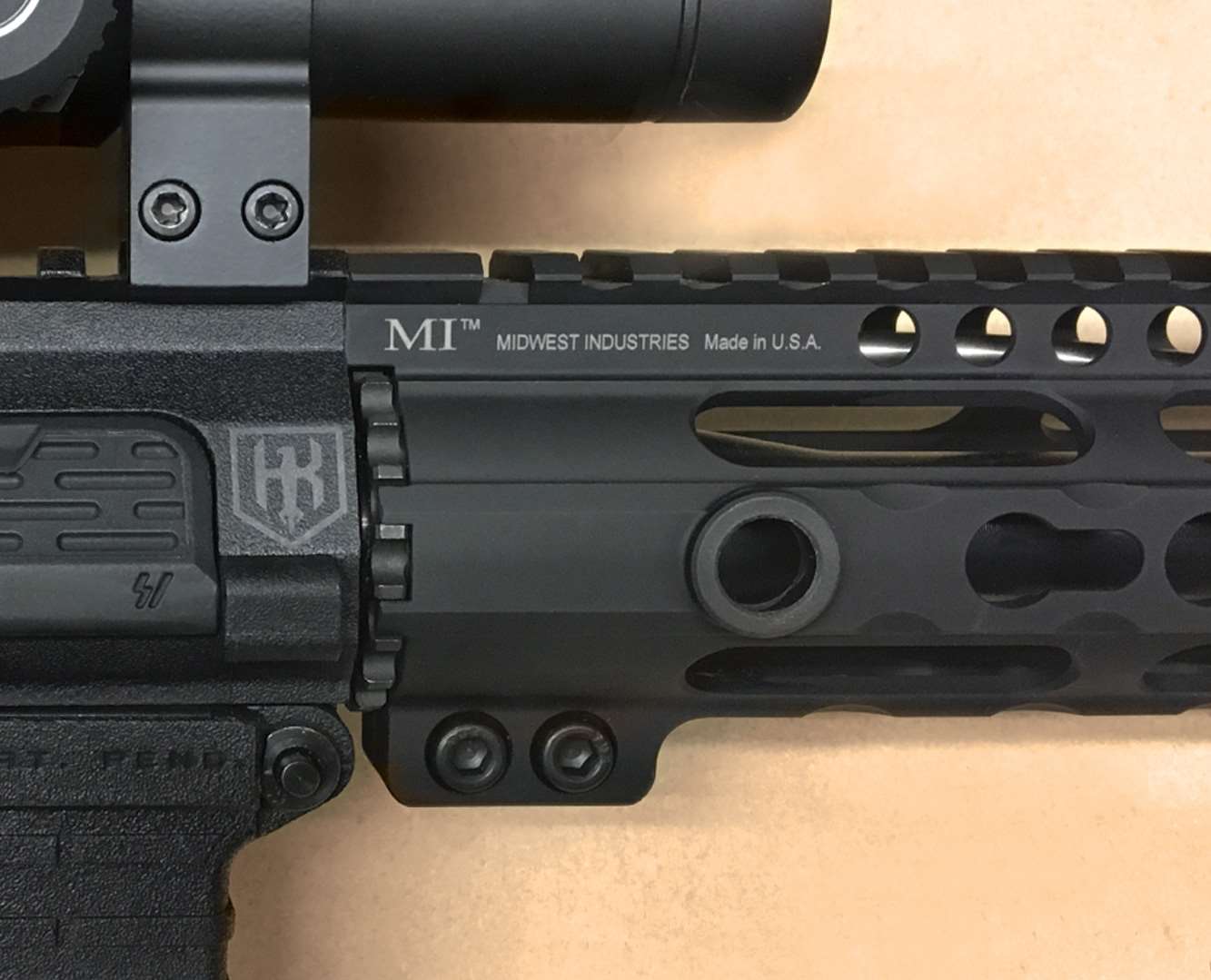
First by a slim margin is the light weight: The nut and 15-inch guard are a narrow-profile 10.3 ounces in the one-piece, free-float “SSK” model we used. We also liked the complete shrouding of the gas block. We’ve built rifles both ways, and both have advantages. If the gas block is just barely beyond the handguard, it’s easier to maintain and/or adjust (though this latter doesn’t apply to our fixed Faxon). If covered, considerable protection is provided; in theory, you could prang the handguard mighty hard yet the rifle would still run. Prang the gas block hard enough, however, and you’ve got a single shot.
But the shrouding of the gas system by the MI actually leaves us with straight-in access to the setscrews for our block, so two birds with one stone there. The 15-inch length also provides plenty to grab, which we especially like with our entry-length stock. De-horning is very complete, so we grip as we please in comfort, but with plenty of texture to be “hard” on the gun.
The tightening architecture of the MI is a jewel as well. A wrench head (you’ll need your own torque rig) locks into a series of teeth that also serve to locate both the gas tube and lugs on the handguard itself. The beauty here is subtle, but very useful. When we torqued down to recommended level we were—of course—trying to route the gas tube right over one of the teeth.
In other words, we either had to loosen or tighten the barrel nut. We just hate to loosen: It seems to be a regular path to working loose at some later date, most likely when least convenient. But the notches are so close in the MI nut that an adjustment for two more pounds was all it took.
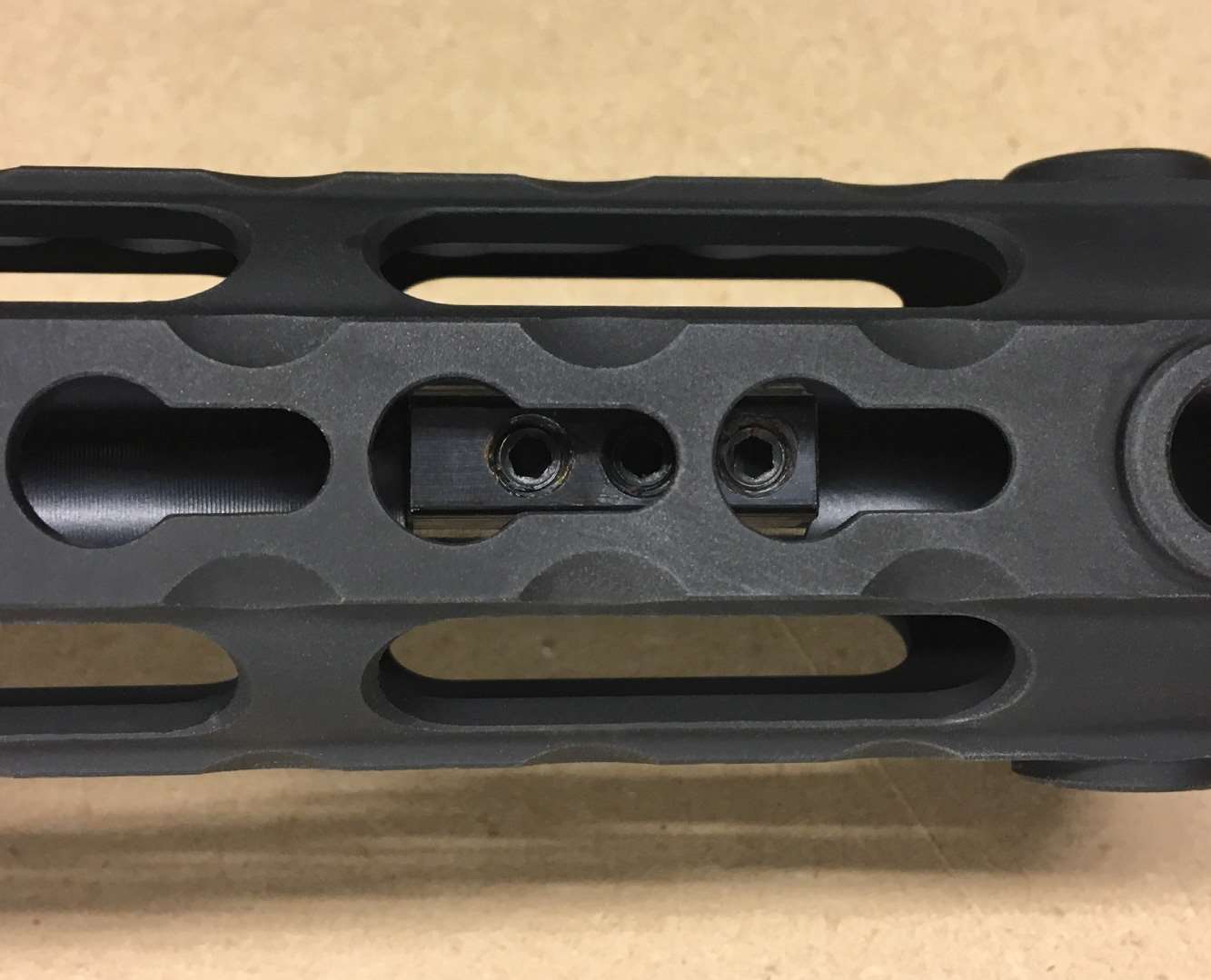
Final goodies are well-thought-out attachment options. Five QD locations are milled right in for sling points (which saves weight over adding them on the rails), and M-LOKs are available at 3, 6 and 9 o’clock. Complete with one 2.1-inch section of Picatinny, you can at least get started with a light or bipod.
Need we say, "highly recommended?"
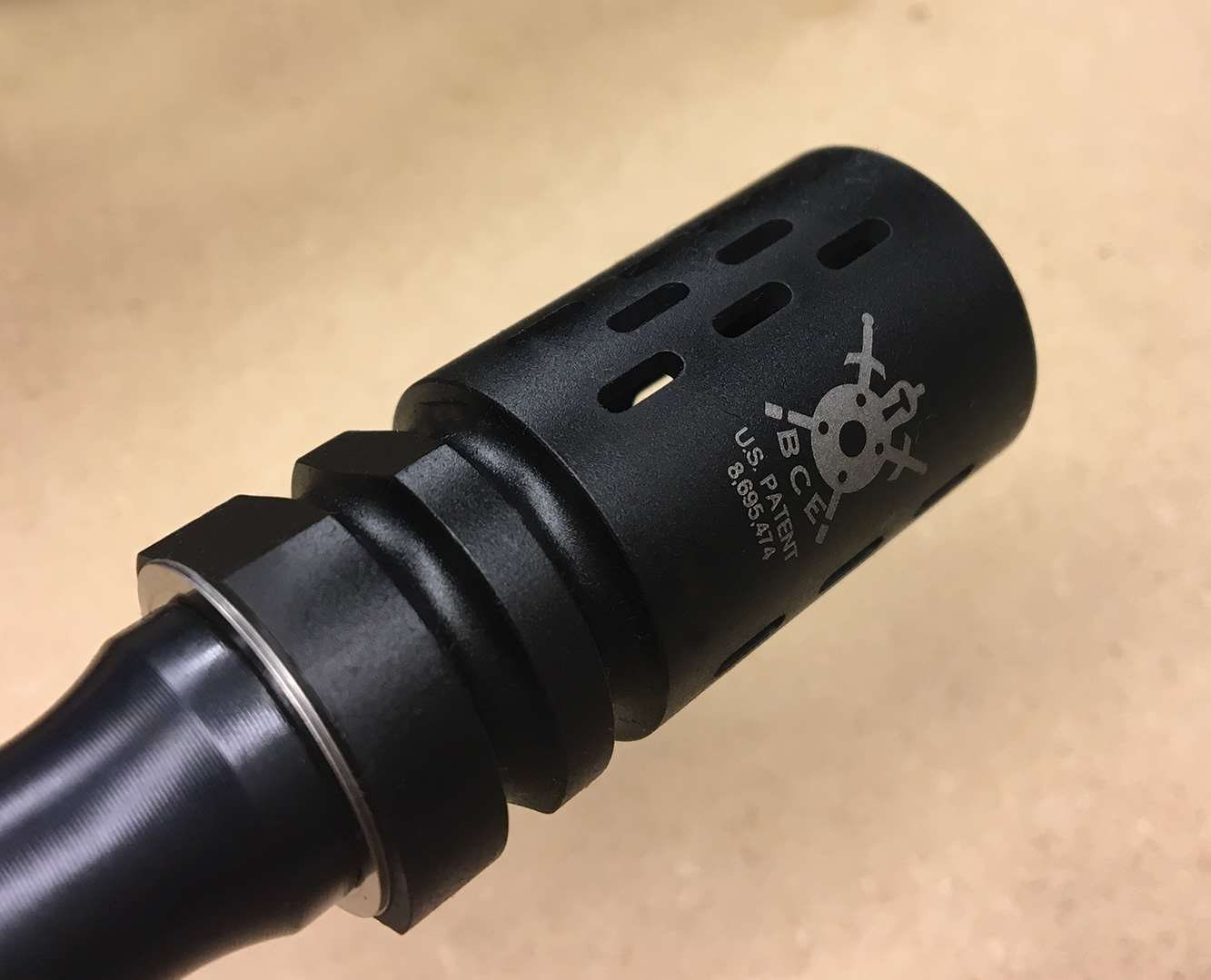
Our last substantive component is a substitution of sorts. We’re no less enamored of the proposed Suarez Kompressor than we were here. But with the Bravo Company “Battle Comp” 1.0, we had a chance to steal back some length (and a little weight, too), so we jumped.
No stranger to this assembly, it was probably the simplest part of the whole build. It’s a work of the machinist’s art in every sense, and goes on like that, too. A sharp eye will note two departures from a standard install—“clocking,” and shims (rather than a crush washer) to facilitate the precise rotation off a straight vertical position.
Why “clock” it at all? We opt for the shortest version we can manage: There are torqueing actions in the Stoner/MSR design that tend to roll the rifle, but the biggest “offender” is the rifling of the barrel. By angling the comp, combustion gases can be vented in a direction that counteracts this tendency to add such roll to normal recoil movement, and helps the shooter recover their sight picture more rapidly.
Shims, in their turn, allow for this adjustment to be made without over-torquing the upper/barrel junction. A crush washer must be crushed to adjust for clock angle, and under some circumstances (mostly to do with thread depth) too much torque could be applied. Shims allow the proper standoff to be achieved directly. We keep ‘em around.
As we hand cycle and look other things over, a few small adjustments remain, so no shooting just yet.
But by next week, who can say?
Frank Winn has been studying arms and their relationship to tyranny, meaningful liberty and personal security all his adult life. He has also been a competitive shooter and firearms safety/shooting instructor for more than 20 years, though he won’t admit how many more than 20.
Part 1 Part 2 Part 3 Part 4 Part 5 Part 6 Part 7 Part 8 Part 9 Part 10