Having spilled the beans on about half of our short/light MSR build, we figure there’s room for one more installment before our SHOT spies begin their communiqués. Then—oh, darn—we’ll be forced to pay heed to the newest, latest and greatest from the big show.
If you haven’t been following along, no worries; just use the links below for all the previous parts. Today we’re filling in some more small parts, though we’d argue they are ones with outsized implications. Our finished rifle would certainly run with “vanilla” selections for these components, but it’ll run better, or at least be maintained more easily, with our substitutions.
KNS Enhanced Pivot and Takedown Pins
We admit we’re going back to the KNS well with this selection, but it’s based on satisfying experience. We’ve used a relative bunch of their parts on various rifles over the years, and our success—or at least luck—has been very good indeed. Fit and finish have been uniform and excellent, but function is where they rise beyond expectations, as well as most peers.
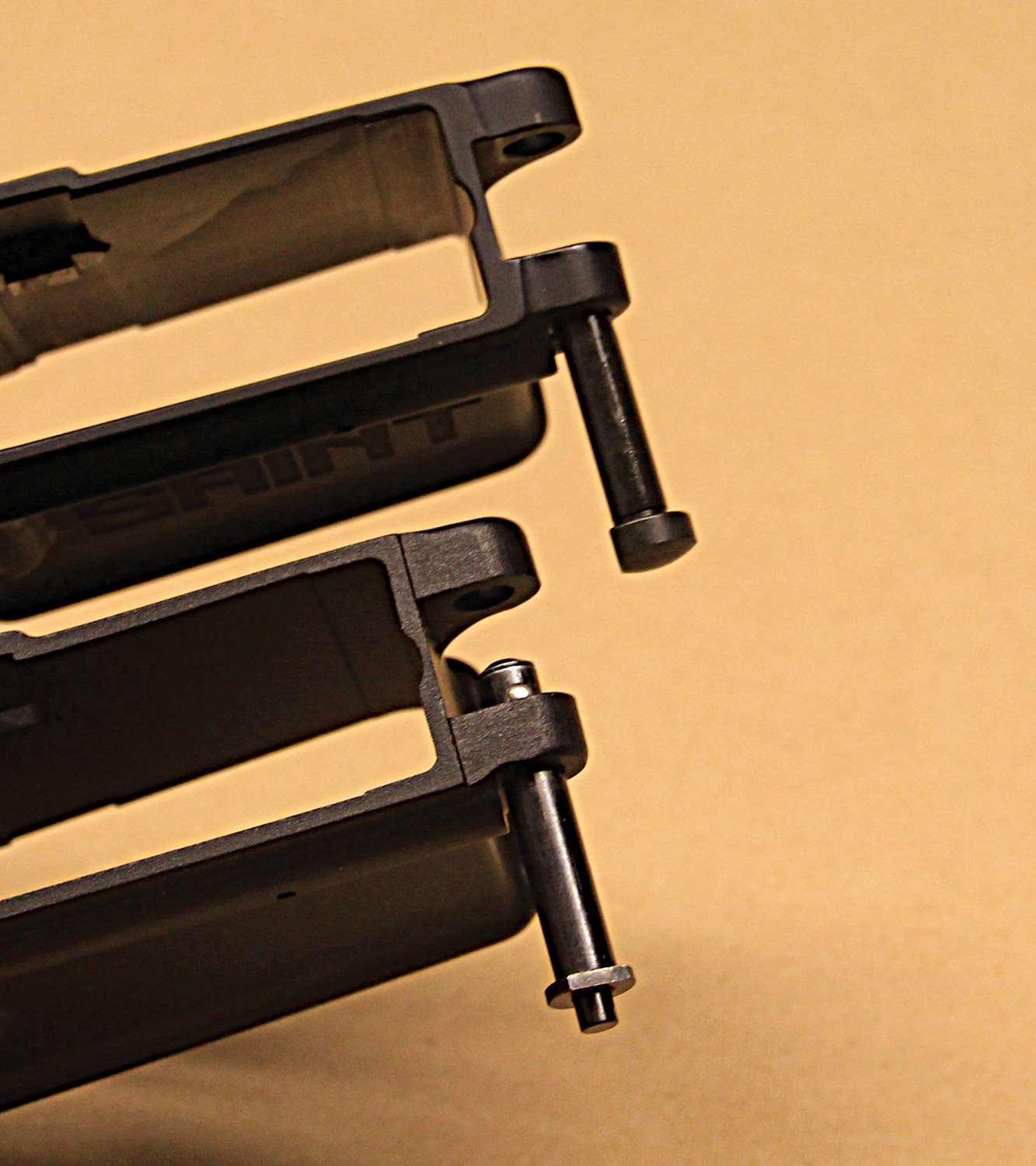
They also eliminate two annoyingly fumble-prone operations during the assembly of an MSR/AR pattern rifle, namely the installation of the fore (pivot) and aft (takedown) pin detents and springs. These essential little buggers retain the normal connect-the-upper-to-the-lower pins, but installs are a tad three-handed without juuuust the right tools. And a reset on these? That’s a real pain … better to do it as the rifle goes together.
The pivot and takedown pin jobs are as obvious as they are essential. It is not odd, then, to observe how many issues can appear with trouble at either position. The first is apparent to the point of an ignominious sort of fame—a poor upper/lower fit. The pins don’t determine this completely, of course, but they don’t escape altogether either. A properly matched upper/lower pair can be sabotaged by even slightly imperfect pins on the small side, and in the long run may introduce an almost unfixable flaw—wallowed holes.
The too-large side of the coin has problems as well, though they’re less likely to cause actual damage. If pins simply don’t fit, it’s obvious, and they should absolutely never be forced. By “forced,” we mean anything more than a lightly lubricated pin inserted with more than a tap from a brass or nylon hammer. Good news here—this is pretty unlikely these days (we’ve only encountered it once, long ago); tolerances are generally that good. But the message remains unmistakable: Get out your calipers and figure out which part is out of spec before proceeding (OD for commercial pins is .245”, ID for holes is no more than .252”). You may need to consult with your gunsmith or upper/lower manufacturer.
There is also such a thing as “too tight.” Here, pins fit, but you wind up with a rifle that is mighty hard to get into. This is supposed to be tool-less, recall, excepting the use of a cartridge tip. An occasional struggle may not sound or seem like much of a problem initially, but if it corrodes your willingness to perform necessary maintenance (that dreary cleaning and lubrication business), it is the beginning of trouble. Don’t call us when stuff starts breaking …
The KNS enhanced pins usually end this once and for all. The particularly clever bit is simple too: The pins are self-retaining. By virtue of a “cap” on one end that allows three ball bearings to retract at the other, they install with ease. Ditto movement for getting inside the rifle for maintenance purposes.
There are critics of the system: Because the pins aren’t retained by the detents anymore, it’s a fact that they can be dropped and/or lost. In practice, we can’t remember having it happen. The push-pull movement that accompanies release is actually quite secure because it starts with both hands in play. Like almost anything else, a little practice pays dividends—we can remove these with a single push-pull motion, and the rifle is easily retained.
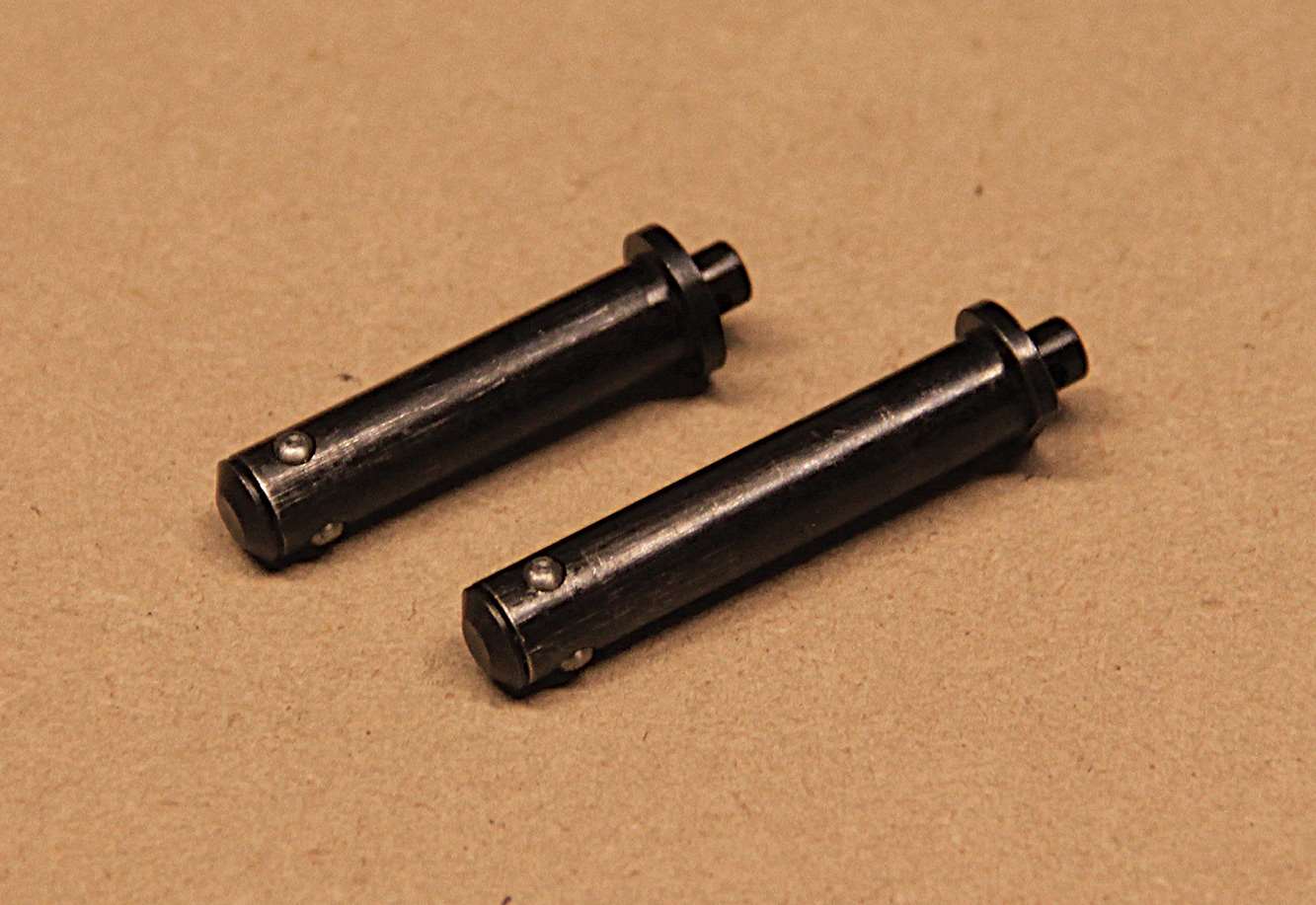
Another benefit comes with the way the KNS pins let you get inside the rifle. While the pivot pin is meant to provide this access while keeping the rifle in one—even if nonfunctional—piece, there are reasons not to do so. One is avoidance of the finger pinching, no-fun of an upper that gets away from you once the takedown pin is out. It rotates forward and down with a haste that ensures a single iteration is all that’s needed to cement a painful lesson.
Such a fumble can also be hard on your rifle’s (hopefully snug) fit. When the weight of the upper yanks the steel pin in those aluminum holes, it isn’t hard to imagine “how” and “why” even a few repetitions are undesirable. But the upshot is really this: Almost no operation for which you’d open the rifle partially isn’t better and more easily done with the rifle apart. Whether you’re avoiding the finger-pinch (always escapable by removing the pivot/front pin first, by the way) or the risk of the slamming rotation, KNSs are a value-added proposition. Pull both those pins, and the front one first, and you’ll see why this is becoming common practice in some circles.
A final appealing tidbit: If you were prepped for the eight or 10 “x” cost multiplier we’re used to on the best and coolest MSR/AR parts, chill—a pair of these runs under $40.
Visit KNS Precision at www.knsprecisioninc.com.
Part 1 Part 2 Part 3 Part 4 Part 5 Part 6 Part 8 Part 9