When hunting is mentioned near any political conversation today, it is a point of order for those who understand the basis of the Second Amendment to say with conviction: “The Second Amendment isn’t about hunting.”
This statement is a reaction to anti-Second Amendment groups and politicians—such as President Joe Biden (D) and former senator and presidential candidate John Kerry (D)—who have tried to divide and conquer gun owners by “going hunting” or mentioning hunters and then claiming “true” sportsmen and women don’t need this or that type of gun.
Biden, in fact, still likes to repeat the weird line that “deer don’t wear Kevlar vests” when he argues that hunters don’t “need” some arbitrary number of rounds in a magazine. When he does this, no mainstream news reporter bothers to ask Biden what right protected in the U.S. Bill of Rights is predicated upon the government’s subjective understanding of need—our constitutional rights are, after all, restrictions on government.
So, given the dishonest politics at play, saying “the Second Amendment isn’t about hunting” is certainly an understandable reaction and a true statement, as hunting is simply an extension of this natural right. The trouble is, this response tends to end the conversation when there is much to say about what hunting does for the Second Amendment.
As many hunting seasons are now in full swing, let’s explore this point for a moment.
First of all, about 15 million people in the U.S. went hunting in 2019, according to Statista. Other estimates put the number somewhere between 14 and 20 million, but if it’s 15 million, this means that only about 4.5% of 328 million Americans went hunting in 2019.
Though this is a small percentage of Americans, consider how much this 4.5% in one year—plus the unknown overall number of people who have hunted—affects American culture.
To get a sense of this hard-to-quantify concept, first realize that when a hunter picks up one of their guns—especially if the gun was given to them by their father or grandfather and has been in their hands on crisp autumn mornings in duck blinds, upland cover or deer stands—they feel much more than the gun’s steel, wood or polymer. To a hunter, a gun they’ve gone afield with is alive with memories. Maybe it even has memories beaten into it, like a Remington Model 870 Wingmaster I still carry for small game. This pump-action shotgun has a dinged and chipped stock, bluing that’s nearly gone, a fixed modified choke, no ventilated rib and a simple steel bead on the end of a 28-inch barrel. It’s as battered as a 40-year-old boxer who should have hung up his gloves at 30. But I shoot this shotgun, just as my father did. It is alive in my hands. (Take a breath, anti-gun types—I’m using “alive” metaphorically.)
Hunting is simply a use of our Second Amendment rights; the trouble is, this true statement tends to end the conversation when there is so much more to say.
This is why, when hunters talk about guns, even to non-hunters, these memories are within the beat of their words and in the depths of their eyes. This earned reverence for the tools they use has an infectious influence on how their families, friends and others they interact with perceive guns. Hunters are, to use a modern term, major cultural “influencers” who are spread out across America. As a result, even non-gun owners who happen to know a hunter might think when they come across a mainstream-media attack on gun ownership: Well, my Uncle Joe is a hunter and he has all of these guns and he is a good guy, so this doesn’t ring true to me.
Real things—and nothing is more real than hunting—just have a way of vaporizing fake mainstream-media narratives.
Indeed, hunting is so earthy, experiential and practical, it even has its own archetypes that help people to grasp who hunters are. Consider, for example, the upland bird aficionado. He might have a shotgun that is a work of art, or the gun might be as beaten and weathered as an old boat oar. Whatever the case, to him (or, increasingly, to her), the shotgun, and how he carries it in the field, has a touch of what the Spanish call gracia in it, a word that deals not with things but with the aesthetics of moving action. Ideally, he might even be trying for a little of what the Spanish call duende, a characteristic the author James Michener said is almost indefinable, as it means something with taste, refinement and elegance in just the right proportion and with no showiness. It is something a person can only manage for fleeting moments when life and art meet before again separating with a bad gesture or missed shot.
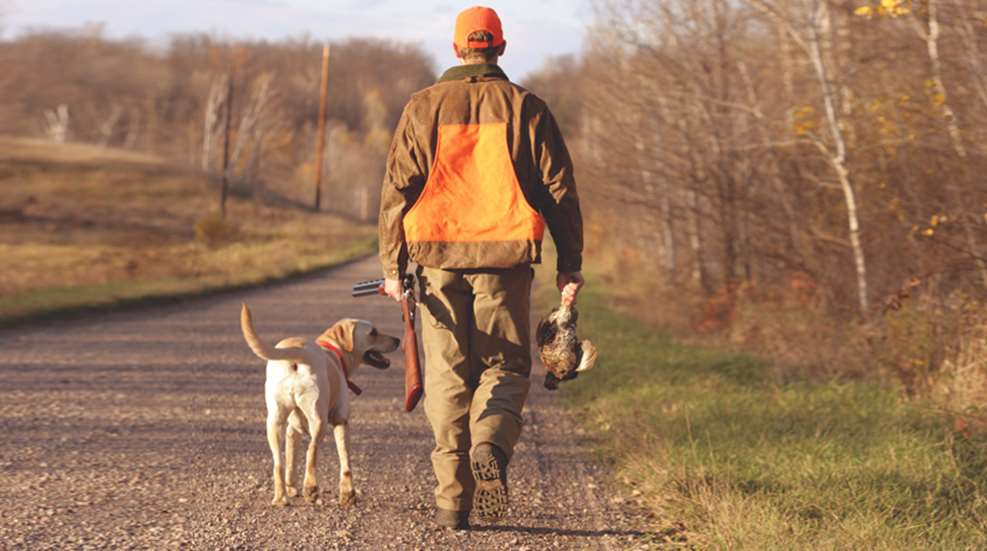
The shotgun, after all, is a friend, a trusted companion who comes along as an integral part of adventures in the field. When an upland hunter picks up a shotgun he knows, it points him toward a wild escape. Such a hunter might wear a classic upland coat, pants and vest splashed with orange, or he might be in jeans and flannel. Regardless, a hunter, with a gun in hand, is embodying an established archetype dating back to classic Outdoor Life covers and before. You can find him in the pages of Robert Ruark’s classic The Old Man and the Boy and in Corey Ford’s famed posthumously published story “The Road to Tinkhamtown.” Though now misunderstood by op-ed writers at The New York Times, even the fashion set is aware of this upland-bird-hunting archetype. Beretta, after all, has stores in Milan, Paris, London and New York—and, oh yeah, there’s one in Dallas, too.
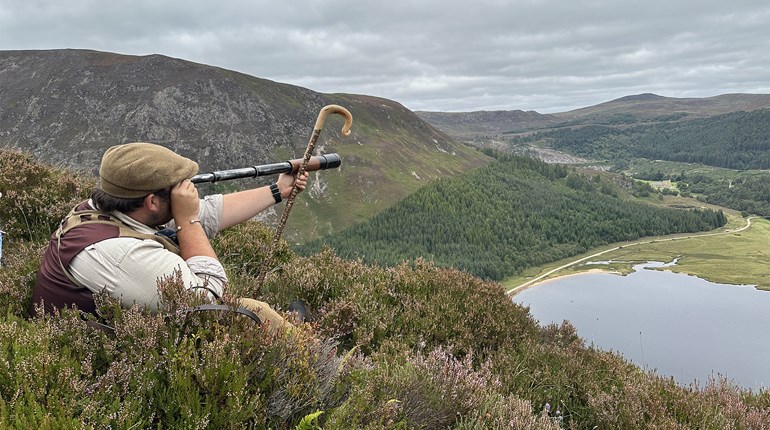
Different icons can be found for various subsets of waterfowl hunters, for various styles of deer hunting and much more. Hunting also has new and emerging archetypes, such as the high-country big-game hunter in technical clothing that uses innovations from climbing apparel.
Such is why, when anti-gun politicians pretend to be part of this culture, they are quickly seen for the frauds they are; pretenders are just so easy to spot within these complex cultural milieus.
So, no, the Second Amendment isn’t about hunting, but one of the reasons the Second Amendment stays relevant in our culture is because of hunting. Whether you hunt or just see sportsmen parked along the rural roadways at this time of the year, understand they are a part of what keeps this right practical and whole. They are doing something real, not virtual. This is culturally impactful. And we haven’t even touched on the game management hunters do for us or how much they pay for conservation across America.