This feature appears in the November ‘16 issue of NRA America’s 1st Freedom, one of the official journals of the National Rifle Association.
A hurricane named Maj Toure is storming the inner cities, teaching gun rights and preaching gun responsibility, and reminding us why America needs the ‘hood.
Maj Toure was 15 years old the first time he held a gun. There wasn’t a certified firearm instructor around to ensure he knew how to be safe and responsible before he ever touched the firearm. His parents weren’t around, and neither were any other adults. Instead, he found the old revolver in his North Philadelphia home, and to this day he’s not sure who brought it into the house—he suspects an uncle who was a drug abuser.
“It was the dumbest thing ever,” he admits. “There was this ancient revolver. I didn’t even know it was a revolver at the time. It was just a gun. I put it on my hip, I walk around, and you know, it gives you courage. It was the dumbest …” He stops. “You know, I can laugh about it now, but it was so stupid. Nobody got hurt or nothing, but it was stupid.”
It’s a common story in too many neighborhoods. But Toure is hoping—and working—to change the ’hood. He knows no criminal is going to pay attention to “safe storage” laws, so he’s committed to doing what really works. It’s his goal to bring real education and real training about guns to inner cities around the nation that have long been plagued by drugs and violent crime. The 29-year-old activist is the founder of Black Guns Matter, a training and education program designed to educate inner-city residents about their rights and responsibilities when it comes to firearms.
Toure says he has seen too many young men make stupid and tragic mistakes because they were never actually taught about legal gun ownership and all that it entails. “I buried three homies last week,” he says, eyes flashing. He doesn’t want to bury any more.
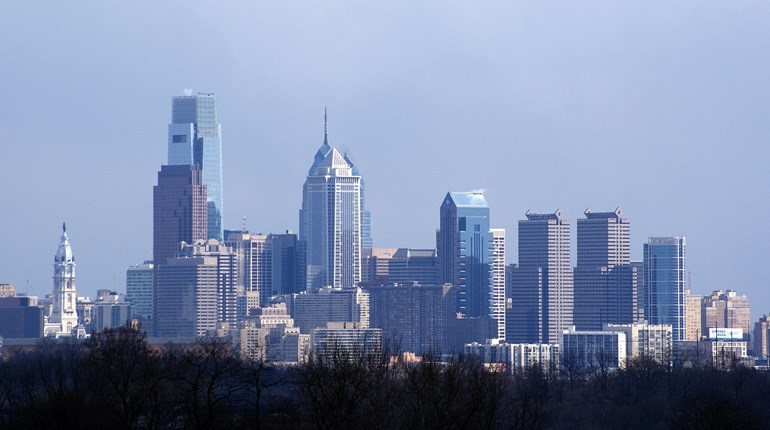
North Philadelphia is home to about 240,000 people, the vast majority of them black or Hispanic. The area began as a collection of small towns that became absorbed by the growth of Philadelphia. As the industrial revolution changed the country, so too did it change the community—the pastures, small farms and rural mansions of North Philadelphia gave way to factories, row houses and apartment buildings. The working-class neighborhoods of the first half of the 20th century might not have had the affluence or influence found in other parts of Philadelphia, but they still offered stability and a sense of security for their residents.Toure says he has seen too many young men make stupid and tragic mistakes because they were never actually taught about legal gun ownership and all that it entails. “I buried three homies last week,” he says, eyes flashing. He doesn’t want to bury any more.
That began to change when the factories started closing. The jobs attached to those factories weren’t easily replaced, and the promise of cheaper goods made somewhere else seemed like a small consolation in comparison to the negative impacts felt in the community. A riot in 1964, sparked by a false rumor that police had killed a pregnant woman, resulted in hundreds of businesses being destroyed. Many of them never reopened. North Philadelphia’s decline accelerated through the ’70s.
By the mid-1980s, when Maj Toure was born, North Philly was dealing with drugs, gangs and even a serial killer named Gary Heidnik. Yet there were signs of a turnaround. There were 274 homicides in Philadelphia in 1985, for instance, but that number was trending in the right direction, down from 435 in the mid 1970s. Philadelphia Magazine’s Hope Gibbs wrote at the time that “police officials say the number of murders is decreasing, in part, because the number of 15-35 year olds—the main age group of both killers and victims—is also dropping as a percentage of Philadelphia’s population.” As a theory, it seemed to make sense. It was also dead wrong. In 1986 Philly saw 343 murders, and by 1990 the City of Brotherly Love recorded more than 500 homicides.
Maj explains that his neighborhood in North Philadelphia is slowly gentrifying, in large part because of the expanding presence of Temple University. There are fewer homicides these days, but robberies are up. In fact, according to Maj, those Temple students make tempting robbery targets for criminals in his neighborhood searching for victims.
“They look like lunchmeat,” he states flatly. “You’ve got a bunch of wolves and hyenas, and they’re just like lunchmeat.”
Philadelphia’s crime numbers may have receded from the highs of the early 1990s, but since 2014 the city has seen a new increase in the homicide numbers (as of Sept. 5, homicides are up 9 percent in 2016 over the same time period in 2015). And even when the numbers were dropping across the city, crime in North Philly never went away—not the drugs, not the gangs, not the wanton violence stemming from petty disagreements. North Philly wasn’t nicknamed “The Badlands” for nothing.
Talk to Toure, however, and he’ll tell you it’s a mistake to write off his neighborhood as a wasteland. Plant the right seeds, Toure believes, and an urban oasis can grow.
“This isn’t a privilege, this is a right. This is a human right. Self-preservation is a human right.” –Maj ToureThose fruitful seeds were planted in Toure’s mind by another uncle—a man who had served in Vietnam. Through him, Toure as an adolescent actually learned about firearms and their proper use.
“I would watch him strip his firearm and put it back together and I was like ‘What the hell did you just do?’” he recalls. “He was quick, you know. Boom-boom-boom! I had other homies, you know. They had guns too. But they weren’t the same way around guns. And seeing that, I was able to see the juxtaposition and see, ‘Oh, there actually are people who can do this properly and know what they’re doing.’”
That realization led directly to the formation of Black Guns Matter, although Toure says the biggest driving force behind his outreach actually came from reading the Constitution. “In reading the Constitution, I’m like ‘Yo, this is actually really clear!’ And then seeing things from a ’hood perspective and going other places … seeing that this is not being applied, especially in my neighborhood, in my demographic. This isn’t a privilege, this is a right. This is a human right. Self-preservation is a human right.”
From then on, inspired by the Founding Fathers who first moved to protect these rights, along with the individuals and groups in the civil rights movement who recognized and exercised their right to keep and bear arms for self-defense, Toure decided to do something about educating his community about their rights. He says many of his friends and neighbors have absolutely no knowledge about firearms, or what it takes to legally own them.
“They don’t know. I’m telling you,” he stressed with heartache in his voice. “They don’t know. They don’t know the difference between 9 mm and .45 ACP. They don’t understand what a clip is. They don’t understand what a magazine well is. But we can’t even start there. I have to let people know that they even have this right, before we can get to that.”
That’s why Black Guns Matter tries to cover all the basics; everything from teaching the basics of gun safety to stressing the importance of knowing, following and, when necessary, working to change the gun laws. Just as important, however, is teaching young men how to de-escalate situations and stop violence before it breaks out.What he envisions is an urban renewal, made possible not through government programs, but by empowering the inhabitants of the inner city to know and exercise their rights as a free people. With an empowered populace, Toure believes neighborhoods can flourish.
“We definitely deal with conflict resolution, because a lot of the conflict that we’re interacting in, a lot of that can be solved way before we get to a firearm,” Toure asserts. “I don’t want you to have to use your piece. I don’t want you to have to do that. I want you to be able to realize, ‘Oh, he didn’t mean that,’ or, ‘Oh, he’s reaching for a cellphone or a wallet, not a firearm.’”
After holding regular Black Guns Matter events in Philadelphia for the past few months, Toure is taking his message on the road. Raising money through sales of t-shirts and hoodies emblazoned with the Black Guns Matter logo, as well as through a GoFundMe page, Toure plans to host Black Guns Matter programs in Chicago; Washington, D.C.; Detroit; and other cities beset by violence. He’s kicking off his tour in Baltimore, where in 2015 there were more than 300 murders, leading to the highest per-capita homicide rate in the city’s history. It’s also home to some of the country’s more restrictive gun laws, including sweeping anti-gun legislation signed into law by then-Gov. Martin O’Malley in 2013.
“That’s one of the reasons why we’re going to Maryland,” he says. In addition to the new laws put in place a few years ago, Toure says the state has real problems with recognizing the right to carry. “You know, it’s a ‘may-issue’ state. So that’s hard. But that’s why we’re going to the hard places first.”
Even if it’s hard, Toure says it’s worth it. What he envisions is an urban renewal, made possible not through government programs, but by empowering the inhabitants of the inner city to know and exercise their rights as a free people. With an empowered populace, Toure believes neighborhoods can flourish.
“The crime rate will drop,” he says. “We’ll inform some people. We’ll strengthen the community. Because if there’s less crime, if there are fewer homicides, if there are more people being responsible, we’re gonna get that money, right? If people feel more comfortable because there are less homicides, carjackings, rapes, all these other things, businesses start to flourish a little bit more. They can stay open later. All of these things have far-reaching ramifications.”
Toure wants to educate others about guns. But like any good teacher, he knows he has a lot to learn as well. In fact, he says he wants to try hunting.
“You know who I want to hunt with?” he asks. “One of my favorite bodybuilders. He’s in Texas. Name’s Branch Warren. He eats what he hunts, you know what I mean? But I definitely want to try hunting. I’m good at the range, knowing the information, translating it philosophically to people who don’t understand it. Yeah, I’m top-tier, Hall of Fame, I’m on my way no doubt. But as far as moving targets, like in hunting, I have no experience there, and that’s a weakness. That’s where I need to get my inner Ron Swanson on.”
With Toure’s growing popularity and the increased media attention, the opportunities to explore the United States and interact with a diverse group of gun-owning Americans has only strengthened his belief that some Americans are being shortchanged of their rights.
“When I’m around my really, really rich rap friends, and I see how they live in Beverly Hills, I’m like, ‘Oh!’” he says. “When I’m with [Sean] Hannity, and he has a carry permit in New York, and I’m like, ‘How’d you get that?’ and he’s like, ‘Well, I kind of have this show, you know. …’”
What Toure is fighting for is equality—that the right to keep and bear arms isn’t just for celebrities or their security guards, but that it’s as much a right in the inner city as it is in the suburbs and America’s small towns and open spaces.
With that right comes responsibilities. But it’s difficult, if not impossible, to learn how to be a responsible gun owner in many urban areas. With Black Guns Matter, Toure is working to educate individuals while changing the culture—solely for the cause of liberty for all.